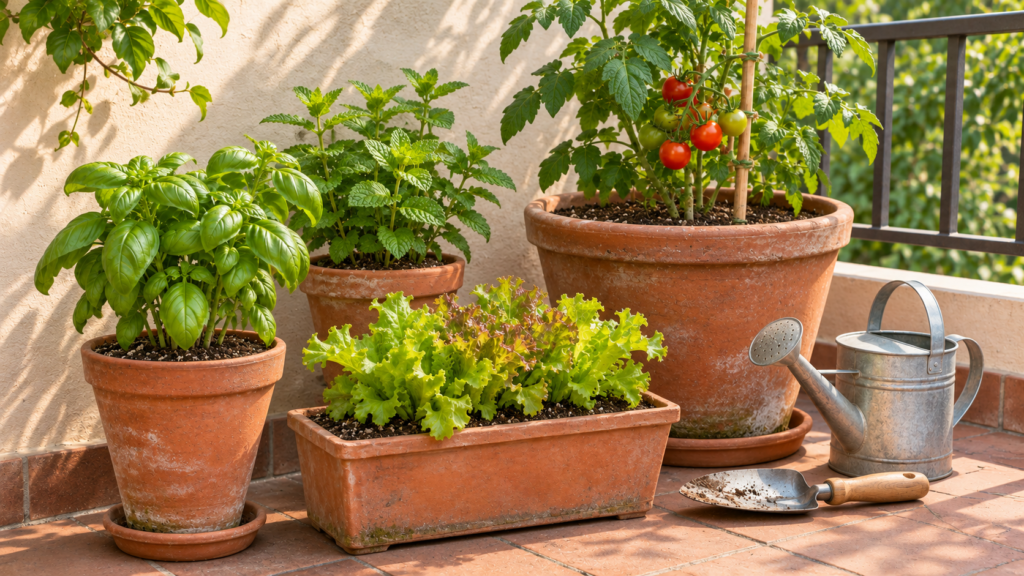
Wondering how to start a home garden? You do not need a large backyard. A balcony, patio, or sunny outdoor corner can provide space for a few containers of herbs and vegetables.
The easiest way to begin is to keep your garden small. Choose plants that suit your available sunlight, use containers with drainage holes, and learn how their watering needs change with the weather.
Table of Contents
Home Garden with Herbs and Vegetables1. Check Your Available Sunlight
Before buying plants, observe your growing space in the morning, at midday, and in the afternoon. Count the hours of direct sunlight rather than simply deciding whether the area looks bright.
Most fruiting vegetables, including tomatoes and peppers, need around six to eight hours of direct sunlight each day. Leafy greens such as lettuce can tolerate less, although growth may be slower.
Choose crops that fit your conditions. A shaded balcony and a sunny terrace will not support the same plants equally well.
2. Start with a Few Suitable Plants
Begin with two or three crops you enjoy using in the kitchen. This makes it easier to notice problems and manage watering.
Consider these options:
- Leaf lettuce: useful for small spaces and repeated harvests of outer leaves.
- Basil: a practical choice for a sunny position during warm weather.
- Mint: grow it in its own container to keep its spreading growth separate from other plants.
- Compact cherry tomatoes: suitable for sunny spaces, provided you choose a large enough container and support the plant when needed.
Check seed packets or plant labels for planting seasons, mature size, spacing, and sunlight requirements. Local conditions matter more than a universal planting calendar.
3. Choose Containers with Drainage Holes
Your containers must allow excess water to escape. Choose a size suited to the mature plant rather than the size of the seedling.
Small pots dry out quickly and restrict root growth. Tomatoes generally need substantially more growing space than a small herb plant.
Use clean containers suitable for growing food. Avoid reusing containers that previously held chemicals.
Do not add a layer of gravel or stones to improve drainage. This reduces the space available for roots and can make drainage worse. Use an appropriate potting mix and keep drainage holes clear.
4. Use Potting Mix Designed for Containers
Fill your pots with a growing mix labelled for container plants or vegetables. Ordinary garden soil can become too dense inside a pot and drain poorly.
A suitable mix should hold moisture while allowing air to reach the roots. Check whether it already contains fertilizer before adding more.
Leave some space below the rim so you can water without immediately washing the mix over the edge.
5. Plant and Water Carefully
Follow the seed packet for sowing depth and spacing. If you are using seedlings, handle the root ball gently and follow the planting guidance for that crop.
Water after planting so the growing mix settles around the roots.
Afterward, check moisture regularly instead of watering on a fixed schedule. Feel below the surface: a dry surface does not always mean the entire pot is dry.
Water thoroughly when needed and allow excess water to drain. Empty standing water from saucers. Check containers more frequently during hot, windy weather.
Newly sown seeds may need closer attention to keep the seed zone moist while they germinate.
6. Feed Plants According to Their Needs
Container plants have a limited supply of nutrients. Use a fertilizer suitable for edible crops and follow the label for dilution, quantity, and application frequency.
If the potting mix already contains fertilizer, account for that before feeding again. More fertilizer does not automatically produce healthier plants.
Treat compost as part of a growing system, rather than assuming it will meet every crop’s nutritional needs throughout the season.
7. Build a Simple Care Routine
Spend a few minutes checking your plants regularly:
- Feel the growing mix before watering.
- Look at the undersides of leaves for pests.
- Check that drainage holes are not blocked.
- Support tall plants before they become unstable.
- Record planting dates and any changes you make.
If a plant struggles, check light, moisture, drainage, and temperature before adding fertilizer or applying a treatment.
How to Start a Home Garden: Your Checklist
Start with:
- A growing space with suitable sunlight.
- Two or three manageable crops.
- Containers with drainage holes.
- Potting mix designed for containers.
- Seeds or healthy seedlings.
- A watering can.
- Suitable fertilizer, when needed.
Your first goal is to learn how a few plants respond to your space. Once you can manage them confidently, expand your garden one container at a time.
Learning how to start a home garden is easier when you begin with a few plants, observe their needs, and expand gradually as your confidence grows.
Further Reading
- University of Maryland Extension: Growing Vegetables in Containers
- University of New Hampshire Extension: Growing Vegetables in Containers
- University of California: Drainage in Containers
- Explore more beginner-friendly advice in our Gardening Basics section.